
お知らせ NEWS


先日、アメリカの友人が、ある言葉を送ってくれた。
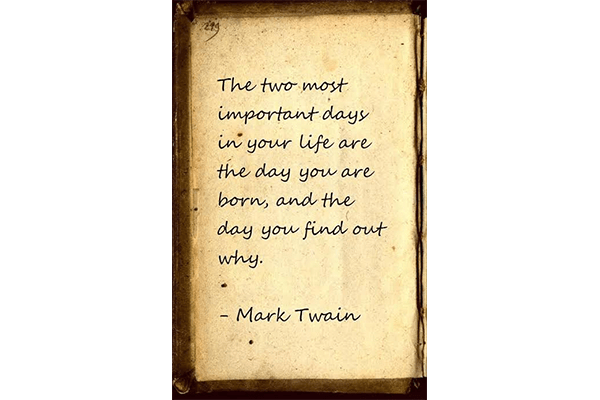
The two most important days in your life are the day you are born, and the day you find out why. — Mark Twain
人生で最も大切な二つの日は、 あなたが生まれた日と、 なぜ生まれたのかを知った日である。
マーク・トウェインといえば、 『トム・ソーヤーの冒険』や 『ハックルベリー・フィンの冒険』を思い浮かべる人が多いだろう。
また、『赤毛のアン』が出版された際には、 作者の L・M・モンゴメリ に宛てて、 「不朽のアリス以来、最も愛らしく、 最も感動的で、最も愉快な子」 という賛辞を送っている(1908年10月3日)。
マーク・トウェインは、人生や死についても、 静かで深い言葉を残した人物である。 息を引き取る直前、娘のクララに向かって、 「もし、また出会えたら……」 と語ったとも伝えられている。
また、生前には、次のような言葉も残している。
私は死を恐れない。 生まれる前、私は何十億年ものあいだ「死んでいた」。 そして、それによって、少しの不都合も感じなかった。 だからこそ、彼の言葉は、 「今」という時間を、どう生きるかを 私たちに問いかけてくる。 人生には、苦しみがある。 それを避けて通ることはできない。 それでも、与えられた時間を 「楽しむ」ことはできる。 どうか、苦しみを、いつか楽しみに変えてほしい。 与えられたこの時が、 静かに消えていくその日まで。
The other day, a friend in the United States shared a few words with me.
The two most important days in your life are the day you are born, and the day you find out why. — Mark Twain
The two most important days in our lives are the day we are born, and the day we discover why we were born.
When we hear the name Mark Twain, many of us think of The Adventures of Tom Sawyer or Adventures of Huckleberry Finn. But he was also a writer who spoke quietly and deeply about life itself. When Anne of Green Gables was published in 1908, Mark Twain sent a letter to its author, L. M. Montgomery, calling Anne “the dearest and most moving and most delightful child since the immortal Alice.”
It is said that just before his death, he spoke softly to his daughter Clara, saying, “If we meet again…”
He also once said: I do not fear death. I had been dead for billions and billions of years before I was born, and had not suffered the slightest inconvenience from it. These words gently lead us to one simple question: how shall we live the time we are given?
Life is never free from pain. Suffering is something none of us can avoid. And yet, we can still choose to enjoy the time we have. I hope that even in hardship, you will one day find joy. That pain may slowly turn into something meaningful. May you live fully, treasuring each moment, until the time given to you quietly fades away.

最近、美しい音楽を聴いた。ショパンとかモーツアルトではない。
アイルランドのソングライターBrendon Grahamがエリス島に最初に開設された1892年 1月1日に最初に降り立ったのがアイルランド人の15歳(実際は17歳であったが)の
Annie Mooreで、その像がエリス島入り口にあったので感動し、歌を作詞・作曲された。
その歌のアイディアの元になっているのはスコットランドの歌”The Water is wide”である。
もともと「恋」がうまくいかなくて、自分の心は、相手の心に残しているのだけれど、二人の距離は戻ることができないほど広がってしまったという歌だ。そして、この自分が故郷を思う心は、故郷に残しているのだけれど、もう帰ることはできないと静かに思っている。
恋人との別れと故郷に心を残した移民・Annieの心が重なっている。
(「Isle of Hope, Isle of Tears」の日本語と英語の歌は次のようです。Youtubeで音楽や作曲家のお話も聴けます。)
1892年1月1日、エリス島の移民局が開設され、アメリカに移民の入国が許された。
希望と涙のその地に、最初に足を踏み入れたのは、15歳のアイルランドの少女、アニー・ムーアだった。
希望、涙、自由、そして不安のある新しい国。
心残りのあるアニーが後にしてきた故郷は、飢えや苦しみがあった国であっても
あなたがあとにしてきた島ではありません。
いつも心の中にある。
小さなバック一つのアニー。そのバックに彼女の人生の全てとこれからの自由の国での未来も。過去が亡くなった時、自分を助けてくれるのは、自分の「勇気」だけだ。
15歳の子どもにとって、アイルランドにいた過去の中に未来はなかったのです。
過去の中に未来はありません。
1943年にエリス島の入管事務局は閉鎖となったが、1892年から1700万人もの人々が、新しい人生を求めてやってきた。
Brendan Grahamが春に、このエリス島を訪れ、桟橋に足を踏み入れたとき、15歳の少女にとって、この場所がどんな思いだったのかを考えた。
新しい国への夢と希望が一杯であったけど、苦しかったけれども、故郷の島は、いつも心の中にあったのです。
Isle of Hope, Isle of Tears
— Poem Version —
It was not Chopin. It was not Mozart. It was a song that carried footsteps across water,
and a young girl’s heart across an ocean.
January first, eighteen ninety-two. A cold morning. A new island. A name called for the first time. Annie. Fifteen years old, with one small bag, and a courage too large to measure.
Hope stood before her. Tears stood beside her. Freedom waited somewhere ahead, and fear walked quietly with her.
Her homeland was not abandoned. It was folded carefully and placed inside her heart.
Hunger lived there. Pain lived there. But so did songs, and the sound of home.
The water was wide. Too wide to return. Her heart remained behind, even as her feet moved forward.
When the past can no longer hold you, only courage remains.
There is no future in the past. But there is a future in one brave step.
Seventeen million footsteps would follow hers. But hers was the first.
An island of hope. An island of tears.
And a girl who carried both into a new world.
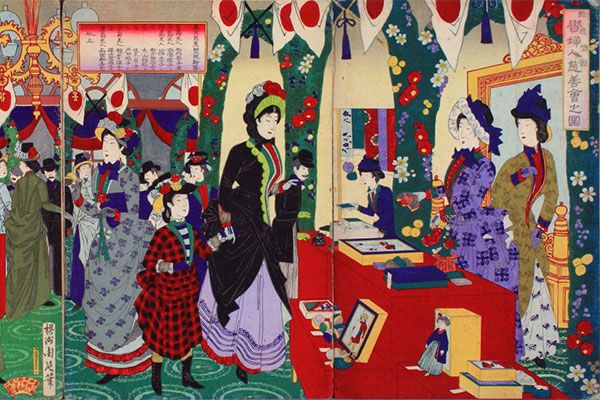
「鹿鳴館の貴婦人」と呼ばれた大山捨松さん(生まれた時の名前は「咲子」)について学んだ。捨松という名前は、渡米する際に母が「この子は国のために捨てた子と思おう。そして、いつまでも帰りを待つ(松)」という願いを込めて、新たに付けたものである。
捨松さんは、江戸幕府を最後まで支えた会津藩の出身である。会津藩の白虎隊は、本来は戦争で戦う年齢ではない若者たちで構成され、戦争の中で多くの命を落とした。捨松さんは11歳で、日本初の女子留学生の一人としてアメリカへ渡った。
帰国後、捨松さんは、ハンサムで英語も堪能な日本人青年(後に大学教授となった人物)から結婚の申し出を受けた。しかし、「国のために何かできることをしたい」という思いから、その求婚を断念した。日本の若者に英語を教えることで国に貢献したいと考えていたが、日本語力や資格の面で不十分であり、その希望はかなわなかった。
その後、年の離れた陸軍卿・大山巌からの度重なる申し出を受けて結婚し、子育てにも尽力した。社交界では「鹿鳴館の名花」と称される一方、看護師としてのボランティア活動にも励んだ。また、同じ女子留学生仲間である津田梅子が創設した私塾(後の津田塾)を理事として支え、特に経済面で大きく貢献した。
晩年、病に倒れた津田梅子を休ませるため、津田塾では代理人を立てる必要が生じた。捨松さん自身が代理を務めたのではなく、「辻マツ」さんを代理人として迎えるために尽力した。スペイン風邪が猛威を振るう中、捨松さんは何度も辻マツさんと話し合い、ようやく「代理であれば」という条件で承諾を得た。しかし、その過程で捨松さん自身がスペイン風邪に感染し、帰らぬ人となった。
津田梅子は五千円札の肖像として知られ、津田塾大学の創立者として広く名を知られているが、捨松さんの名前は、その功績に比してあまり知られていない。しかし、捨松さんはヴァッサー大学卒業時に卒業生代表としてスピーチを務めるほど優秀であり、在学中・卒業後を通して、日本を紹介するエッセーを海外に送り続け、無名の日本のために静かに尽力した人物である。
大山捨松さんが大切にしていた三つの信条
1)会津魂といわれる「ならぬことはなりませぬ」
― 不正や道理に反することは、決して許さないという信念。
2)自分の置かれた立場で最善を尽くす
― どのような境遇にあっても、できる限りの努力をする。
3)日本人としての誇りを失わない
― アメリカにいても、西洋化が進む明治時代にあっても。
②やさしい英語
Oyama Sutematsu
Oyama Sutematsu was known as “a lady of the Rokumeikan.”
Her name at birth was Sakiko. When she went to the United States, her mother gave her a new name, “Sutematsu.” It meant, “I let my child go for the country, and I will always wait for her return.”
She was from Aizu, a domain that supported the Tokugawa shogunate until the end. The Byakkotai of Aizu were very young boys who were not old enough to fight, and many of them lost their lives in the war. Sutematsu went to the United States at the age of eleven as one of the first Japanese female students to study abroad.
After she returned to Japan, she received a marriage proposal from a handsome Japanese man who was very good at English and later became a university professor. However, she refused the proposal because she wanted to do something for her country. She hoped to teach English to young people in Japan, but her Japanese language skills and teaching qualifications were not sufficient at that time.
Later, she married Oyama Iwao, the Minister of the Army, who was much older than her. She raised children and was called “the flower of the Rokumeikan.” At the same time, she worked as a volunteer nurse and supported Tsuda Umeko, her friend from the study-abroad group, who founded a private school that later became Tsuda University. Sutematsu helped the school greatly, especially by giving financial support.
Near the end of her life, Tsuda Umeko became seriously ill, and the school needed an acting head. Sutematsu herself did not become the acting head. Instead, she worked hard to find a suitable person and supported Tsujii Matsu as the acting representative. During the severe Spanish flu, Sutematsu talked with Tsujii Matsu many times and finally received her agreement. Sadly, during this process, Sutematsu caught the Spanish flu and passed away.
Today, Tsuda Umeko is well known and appears on the 5,000-yen bill, but Sutematsu’s name is not widely remembered. However, she was an excellent student who gave a graduation speech as class representative at Vassar College. During and after her studies, she wrote essays about Japan and quietly worked for her country when Japan was still little known to the world.
Three principles that Oyama Sutematsu valued
- The spirit of Aizu: “Naranukoto wa narimasenu.”
This means, “What must not be done must never be done.”
She believed that injustice and actions against what is right should never be accepted.
- Do your best in the place where you are
No matter what situation she was in, she always tried to do her very best.
- Never lose pride as a Japanese person
Even while living in America, and even during the Meiji era when Japan was becoming more Westernized.
「走れメロス」は、太宰治の短編小説である。
この物語は、シラーがギリシャ・ローマの物語をもとに書いた詩を原作としているそうである。作者である太宰のイメージを考えながら読むと、「何か仕掛けがあるのでは」と考えてしまうかもしれないが、私は、素直にそのまま読めばよい作品だと思う。
シラクスの王ディオニスは、人を信じることができず、妹さえも殺してしまった暴君であった。
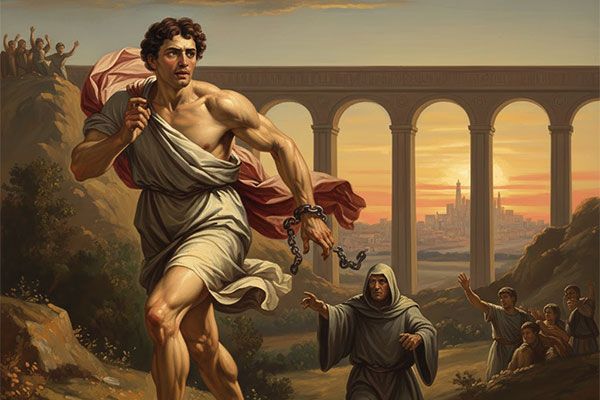
メロスは、その王を改めさせたいと思った。王と約束をし、妹の結婚式を挙げるために村へ帰るが、「必ず戻ってくるから三日待ってほしい」と頼み、友人のセリヌンティウスを人質として城に残して走って村へ帰った。
結婚式を終えたあと、疲れて少し休み、それからまた走り出した。途中で川が氾濫しており、渡ることができず、もう戻るのをやめようかと思った。しかし思い直し、川を泳いで渡った。
さらに疲れ切って、もう帰らなくてもいいのではないかと思ったが、友人セリヌンティウスが信じて待ってくれているのに、見捨てて殺させるわけにはいかないと、再び力を振り絞って走り出した。
夕日が沈みそうな空の下、とにかく走り続けた。服は川に流され、裸のままであった。
そして、ついに間に合った。ちょうどセリヌンティウスが殺されそうになった瞬間であった。
ディオニス王は、「メロスとセリヌンティウスは、王の心に勝った。信実は妄想ではなかった」と言い、さらに「二人の仲間にしてほしい」と願った。民衆は「王様ばんざい」と歓声を上げた。
生きて元気でいる間は、思いどおりにいかないことが多いけれど、それでも友だちを信じ、約束を守ることの大切さを教えてくれる物語だと思う。
|
Run, Melos!
|

2026年3月9日(月)、YAU St. Mary College 布池外語専門学校同窓会、および寺田正親校長神父様5周忌ミサ、茶話会を開催します。
創立1987年、1期生卒業1989年度生から、どなたでもご参加ください。
参加ご希望者はお電話にてお知らせください。
■当日のプログラム
①同窓会
東急ホテル 1F モンマルトル 11:00-12:30
②寺田正親校長神父様 5周忌ミサ
カトリック布池教会 信者会館2階小聖堂 2:00 - 3:00
③茶話会
カトリック布池教会 信者会館1階ホール 3:00- 4:00
ミサ中には、声楽家の奥村博代先生の歌、オルガンは石黒眞智子先生、バイオリンは塚田絢子先生が演奏してくださいます。
茶話会の時もバイオリン演奏があります。
当日のお花はイギリスで研修された、柘植悦子先生が担当してくださいます。
受付には坪井先生がお手伝いしてくださいます。
ぜひ、お目にかかって、皆様のお話を聞かせてください。
梶原紀子
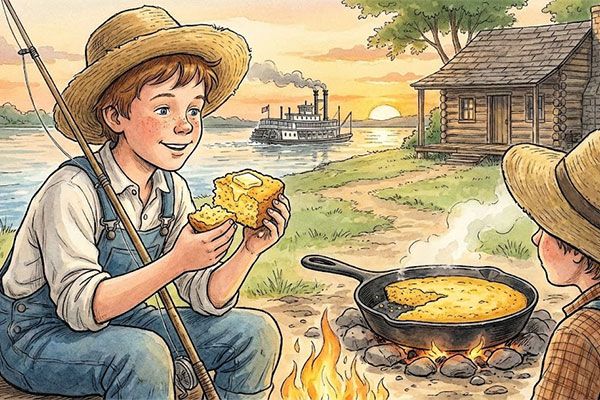
コーンブレッドをもらった。
昔観た映画の『グリーンマイル』や『大草原の小さな家』、
マーク・トウェインの『トム・ソーヤーの冒険』に出てくる、あのパン。
ヨーロッパから北米に渡った
16〜17世紀の清教徒(ピルグリム)たちは、
食べるものがなく困っていた。
そのとき、先住民の人たちが
トウモロコシの育て方を教えてくれた。
アメリカで11月末にある感謝祭は、
先住民の人たちへの感謝の日で、
コーンブレッドと七面鳥で
お祝いのパーティをしたのが始まりだという。
コーンブレッドを割ると、
ほのかに広がるトウモロコシの香り。
その食感と、やさしい甘さ。
アメリカのレストランで、
「どんなパンがいい?」と聞かれて、
コーンブレッド、と答えてみたことがある。
I was given some cornbread.
It is the bread I saw long ago
in The Green Mile,
Little House on the Prairie,
and The Adventures of Tom Sawyer.
When the Pilgrims came from Europe to North America
in the 16th and 17th centuries,
they had no food.
Native people taught them
how to grow corn.
Thanksgiving, at the end of November in America,
is a day to say thank you to Native people.
People say it began with a meal
of cornbread and turkey.
When I break the cornbread,
I smell soft corn.
It has a gentle texture
and a sweet taste.
At an American restaurant,
when I was asked,
“What kind of bread do you want?”
I once said,
“Cornbread.”